
Marion Has No 72-Hour List
No official Marion County source was found with a rolling 72-hour released-person browse, archive, retention rule, or refresh schedule. The MCDC inmate-information page links to a current JailTracker roster. That service is meant for present custody, not a three-day release history. Its Marion backend also returned “Invalid facility” on July 19, 2026.
A search for a Marion County 48-hour or 72-hour page can lead to a same-name county in another state. Those results must not be substituted for Kentucky records. Confirm the state, facility, court, and case before relying on any result.
Build a Three-Day Marion Check
A three-day review works best as a date ledger. Write down each source, the date it reports, and what that date means. A judge may sign an order before the clerk enters it. Jail staff may process the physical release later after checking warrants and detainers. VINE may send an event message at a different point. None of those dates should silently replace another.
- Set the exact 72-hour start and end times and confirm that Marion County means Kentucky.
- Ask the Marion County Detention Center whether the person remains held and request the booking/release or movement sheet.
- Check the Marion court case for the order authorizing bond, dismissal, sentence completion, or another release.
- If KDOC controlled the person, review KOOL and each relevant Daily Releases PDF within the range.
- Check Kentucky VINE for both local jail and DOC records, then verify any transfer or unexpected alert with the reporting agency.
This process is designed for a wider recent-release window. For today’s narrower check, use 24-Hour Releases. For one named person across a longer period, start at Home.
Marion Three-Day Record Fields
There is no public Marion 72-hour table to quote. A proper reconstruction uses the official fields below. Requesting them separately helps distinguish a physical county release from a court decision or state corrections event.
| Field | How it helps across 72 hours |
|---|---|
| Booking or DOC number | Keeps similar names and separate custody records apart. |
| Release date and time | Places the physical event inside or outside the three-day window. |
| Release authority | Connects the jail departure to bond, court order, sentence event, or agency action. |
| Release type | Distinguishes discharge, parole, probation, time served, and transfer. |
| Destination or receiving agency | Shows whether custody continued elsewhere. |
A court disposition and a jail release time answer different questions. The court explains legal authority. The jail record establishes when county custody ended. For a KDOC-controlled person, the state record adds the resulting corrections status.
Weekend Marion Release Timing
The value of a 72-hour window is practical, not official. It spans more calendar days than a same-day check and can catch an event near midnight or a court action entered after the physical release. Research found no Marion source stating a special weekend publication cadence, processing promise, or holiday refresh time. Those details must not be invented.
Instead, compare labeled dates. If the court order is dated Friday and the jail sheet records release Saturday, preserve both. If VINE calls later, label it as a notification time. If the person left MCDC for another agency, record the movement as a transfer rather than placing it among community releases.
Note: A broader time range reduces date uncertainty, but it does not convert the current roster into a historical release list.
KDOC Reports Across Three Days
The KDOC Daily Releases archive is the closest official date-organized tool for state-controlled people. Review each report covering the window and search by name, DOC number, and “Marion County Detention Center.” An official August 19, 2025 report includes MCDC in the “Released From” field, confirming that this route can produce Marion-specific state results.
The archive interface shows why more than one date-specific report may be needed.
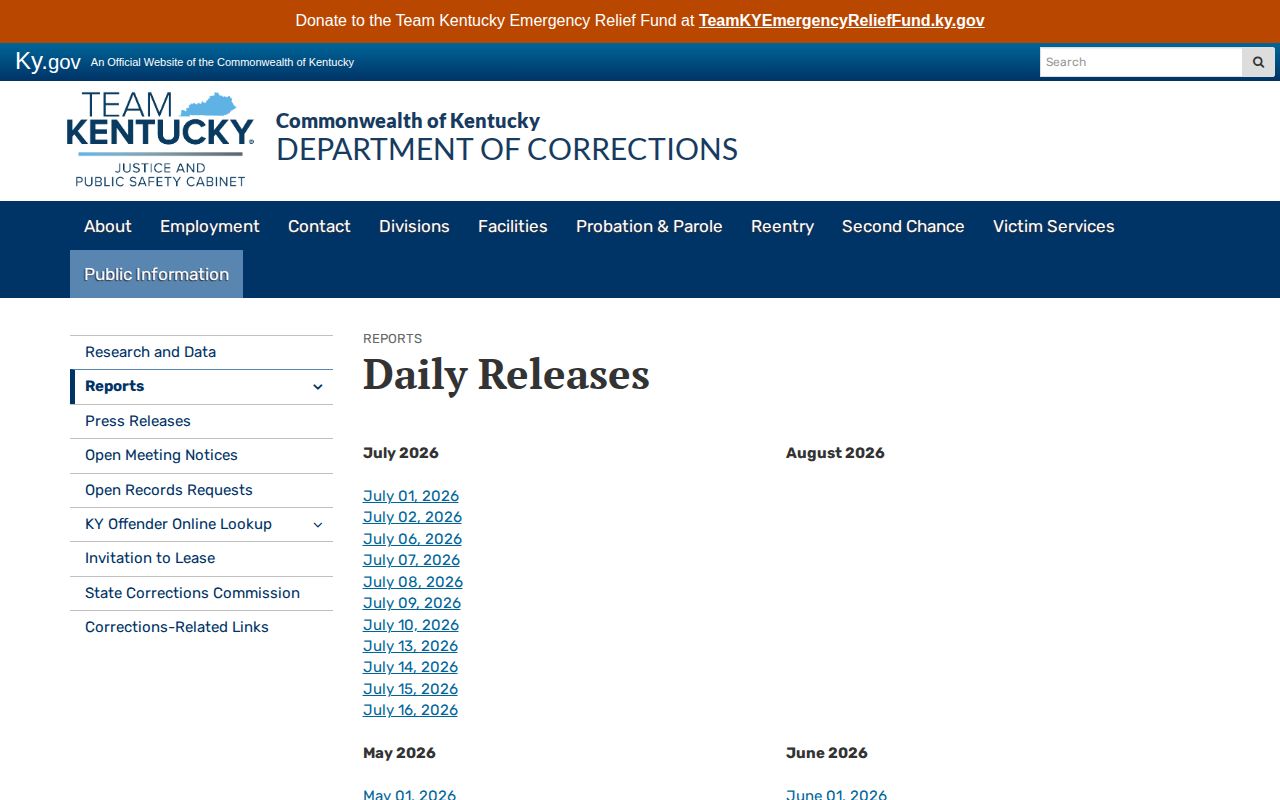
Daily Releases is not a county jail feed. It omits purely local releases outside KDOC control. Its PDF URL date can also differ from the heading inside, so cite the internal report date and keep any mismatch visible.
Read “Type of Release” exactly. Mandatory reentry supervision, parole, and shock probation mean the person remains subject to community supervision. A detainer can mean custody continues with another authority.
Marion Roster Error Explained
MCDC’s official page sends visitors to a roster gateway, yet the Marion data route failed during research. That conflict is a distinctive local limitation. The official link proves the intended channel. The error prevents reliable testing of current names, historical visibility, or how long a released person might remain displayed.
The officially linked roster route was captured rather than replaced with a fabricated list.
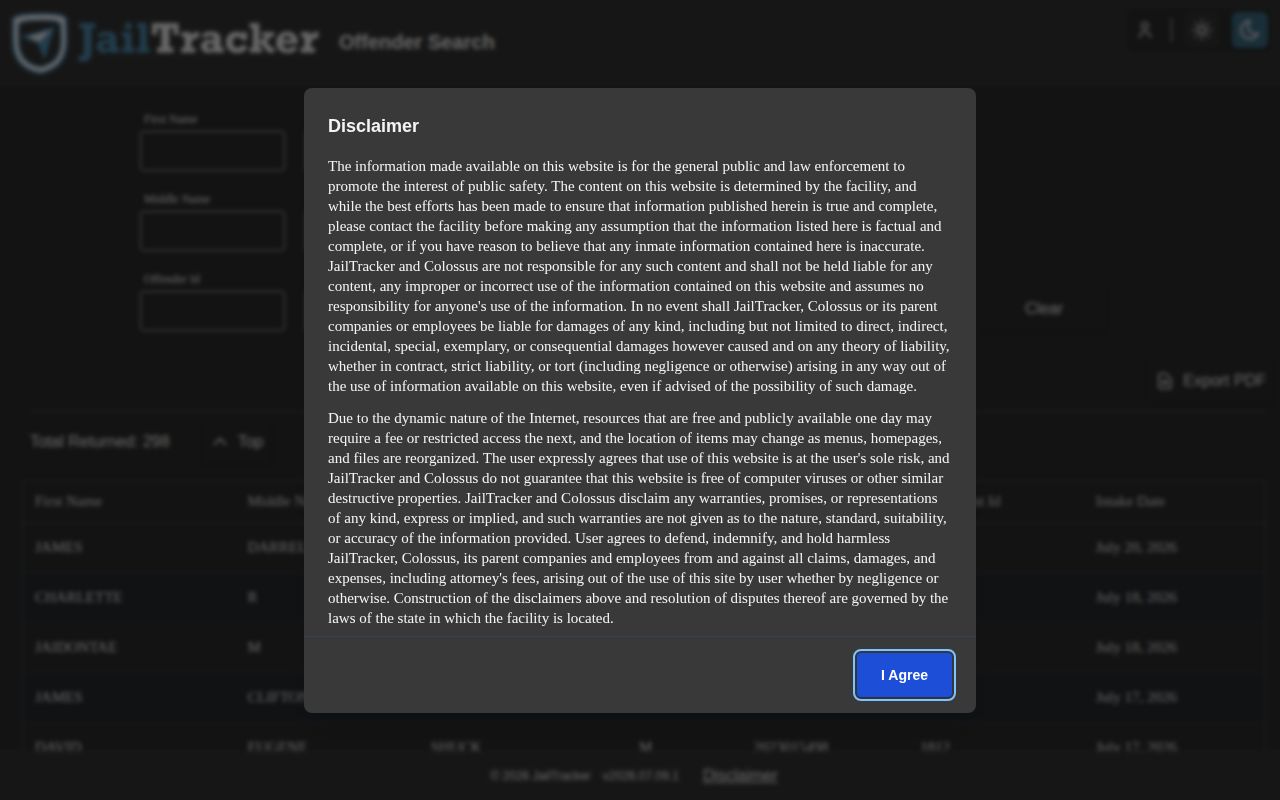
The failure elevates the jailer, court, KDOC, and VINE fallback chain. It does not prove that MCDC stopped maintaining internal booking and release records.
Released or Moved from Marion
A person may leave MCDC by bond, court-ordered release, time served, state commitment, or transfer. A roster drop cannot distinguish them. Kentucky VINE can also report release, transfer, or escape as different events. Escape is not an authorized release and must never be included in a release count.
| Result | Best next source |
|---|---|
| Local bond or court release | MCDC release sheet plus Marion court order |
| State discharge or supervision | KOOL plus KDOC Daily Releases |
| Transfer or detainer | Movement sheet and receiving custodian |
| VINE alert | Live VINE record plus source-agency confirmation |
KOOL’s absence is not decisive for a local pretrial case that never entered KDOC scope. Likewise, VINE is an event and notification system, not a permanent certified archive. The strongest conclusion uses two compatible records.
Request a Marion Date Range
Frame a jail request around one booking period and the exact three-day range. Supply the full name, known aliases, approximate admission date, and a case or booking number. Ask separately for the booking sheet, release or movement entry, release time, release type or legal authority, and any nonexempt receiving-agency field. A narrow request is easier to search and permits partial fulfillment when one item must be redacted.
For KDOC, add the DOC/PID number and request the release or movement entry identifying the date, type, and released-from facility. For the Marion clerk, name the exact case and document, such as a bond order, dismissal, judgment, probation order, revocation, or discharge. One agency should not be asked to certify facts held by another.
Preserve each date’s label. A signed court order, clerk entry, jail processing time, VINE message, and state report date can differ without conflict. The wider window helps collect those records, but reconciliation means explaining what each timestamp represents.
Marion Release Reasons Compared
Bond ends physical jail custody while the case may remain open. Dismissal or acquittal is a court disposition, and the jail sheet supplies the release time. Time served means the credited custodial term ended. A minimum-expiration discharge is a state sentence event and can still coexist with another hold.
Shock probation changes a person from confinement to probation. Parole permits supervised release under stated conditions. Mandatory reentry supervision is a statutory community portion administered by KDOC. None should be shortened to “sentence complete” unless a later official record states final discharge.
A transfer or detainer is the most important false friend in a three-day list. Find the receiving institution through KOOL, a second VINE record, another county, BOP, ICE, or the movement sheet. Escape is also a VINE event but is not an authorized release. It must never be counted as one.
Marion Records After Release
No official source states how long a released person stays visible in the Marion JailTracker service or how often that service refreshes. Do not borrow a retention period from another JailTracker county. The invalid-facility response also prevents a sound local test of roster persistence.
KDOC Daily Releases is a historical date archive, but the years now linked are not a promise of permanent retention. KOOL is an operational record that changes with corrections status. VINE is a current event and notification system, not a certified historical repository. Court files can move offsite or become restricted under lawful sealing or expungement.
These differences explain why “no result” has several meanings. It may reflect the wrong custody system, a technical error, indexing, changing operational data, restricted access, or an expungement order. It does not prove that no booking or release occurred.
Document the Marion Search
Save the source URL, access time, identifiers used, and meaning of every date. If a Daily Releases filename differs from its internal heading, cite the heading and note the mismatch. A clear log makes the three-day reconstruction reproducible without implying that Marion publishes a feed.
Marion 72-Hour Record Offices
For a three-day custody timeline, Jailer Barry Brady and the official Marion detention office own the MCDC release and movement records. Sheriff Jimmy Clements heads the distinct Marion County Sheriff’s Office, whose law-enforcement records may document the arrest but not the jail’s later processing time. The Marion Court of Justice and clerk supply the case order or disposition. Comparing those three offices across the full range preserves the difference between arrest, legal authority, and physical release.